Popina Mango: The Creative Font You Can Color Yourself
More Than Just Letters: Understanding the Popina Mango Typeface
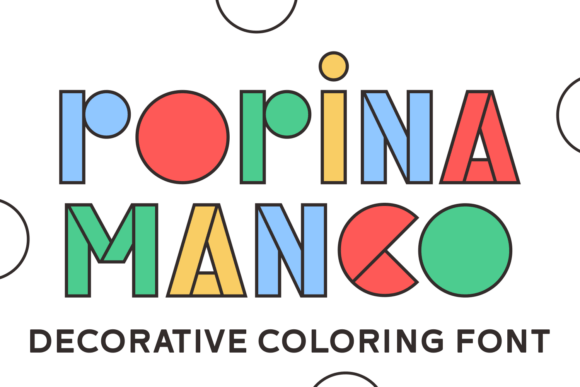
When you first encounter Popina Mango, it’s immediately clear this isn’t your typical font. It’s a coloring font, a concept that fundamentally changes how you interact with typography. At its core, Popina Mango is a display font with a distinct, clean outline style. Think of it as a beautifully crafted coloring book page, but for your digital and print projects. The letterforms are modern, with a friendly and approachable personality that feels both playful and professional. It’s a creative font that invites participation, transforming static text into an interactive design element.
The visual characteristics of Popina Mango are defined by its consistent, medium-weight stroke that forms the outline of each character. The shapes are rounded and organic, giving the typeface a soft, approachable feel that avoids harshness. This makes it incredibly versatile. Unlike a solid sans serif font or a detailed script font, Popina Mango provides a blank canvas. Its inherent style is contemporary and clean, fitting perfectly into modern typography trends that favor minimalism and user engagement. The font’s uniqueness lies in this dual nature: it’s a fully functional character set with its own distinct aesthetic, yet it’s also a framework waiting for your personal touch.
Where Popina Mango Truly Shines: Practical Applications
The real value of a premium font like Popina Mango is in its application. Its outline style isn’t just a gimmick; it solves real design challenges. For brand identity projects, it offers a powerful way to create a recognizable and engaging visual language. Imagine a children’s brand using Popina Mango for its logo, where the colors can be adapted for different product lines or seasonal campaigns. The core logo design remains consistent, but the color application keeps it fresh. This creates a dynamic system that builds brand recognition while allowing for creative flexibility.
Its utility extends across numerous domains:
- Marketing & Social Media Graphics: Create eye-catching headlines for posters, flyers, and Instagram stories. The outline effect naturally draws the eye, improving visual hierarchy. You can fill the letters with solid colors, gradients, or even subtle textures to match your campaign’s mood.
- Packaging Design: On product labels or boxes, Popina Mango can make the product name stand out. The ability to color the text allows it to harmonize with the packaging’s color palette or contrast sharply for emphasis, directly influencing brand perception on the shelf.
- Editorial Design & Publishing: For book covers, chapter headings, or magazine titles, it adds a layer of artistic flair. In editorial design, it can break the monotony of body text set in a traditional serif font or sans serif font, creating engaging entry points for readers.
- Web Design & Digital Content: As a web design asset, it can be used for hero sections, call-to-action buttons, or featured article titles. Its unique style boosts audience engagement by making the interface feel more crafted and less generic.
- Personal & Craft Projects: Beyond commercial use, it’s a fantastic tool for hobbyists. Think custom invitations, personalized home decor quotes, or unique scrapbooking elements. It brings a professional design asset feel to personal creations.
When considering a commercial font, always review its license. Popina Mango, like other professional fonts, comes with specific terms. Ensure its license covers your intended use, whether for a client’s logo, merchandise, or digital products. This is a critical step in maintaining professionalism and avoiding legal issues down the line.
Integrating Popina Mango Into Your Design Workflow
Choosing the right font is about more than just aesthetics; it’s about fit. Before committing to Popina Mango for a project, ask yourself: does the playful, interactive nature of a coloring font align with the message and audience? It’s perfect for brands that want to appear approachable, creative, and modern. It might be less suitable for ultra-serious, formal contexts where a classic serif font would convey more authority. Testing is key. Mock up a headline or a logo concept to see how the outline style interacts with your other design elements.
Font pairing is where you can really refine the look. Popina Mango’s bold, outlined nature means it pairs best with simpler, more neutral companions. A clean sans serif font for body text or a simple script font for accents can create a balanced and readable composition. Avoid pairing it with other highly decorative or ornate fonts, as this can lead to visual clutter and harm readability. The goal is to let Popina Mango be the star of the show where you need impact.
Practically, when you work with the font, explore all its features. Does it include stylistic alternates? Are there multiple weights or variations? Understanding the full character set allows you to maximize its potential. For logo design, you might use a specific alternate letterform to create a more unique monogram. Remember, the outline is your canvas. Experiment with coloring techniques in your design software—using solid fills, patterns, or even clipping images within the letters can yield stunning results for everything from social media graphics to packaging design.
Ultimately, Popina Mango is more than just a creative font; it’s a versatile design tool. Its strength lies in its ability to adapt to a color story, making it a dynamic component of any visual system. By understanding its personality, testing its application, and pairing it thoughtfully, you can leverage this unique typeface to create designs that are not only visually striking but also deeply engaging and memorable for your audience. It represents a shift towards more interactive and personalized typography, a valuable asset in any designer’s toolkit.