Richter: The High-Velocity Display Typeface
When you're building a brand that lives in the fast lane, every visual element needs to communicate speed, power, and precision before anyone reads a single word. That's the space where the Richter font operates. This isn't a typeface that sits quietly in the background—it's engineered to dominate layouts and inject immediate kinetic energy into any project it touches.
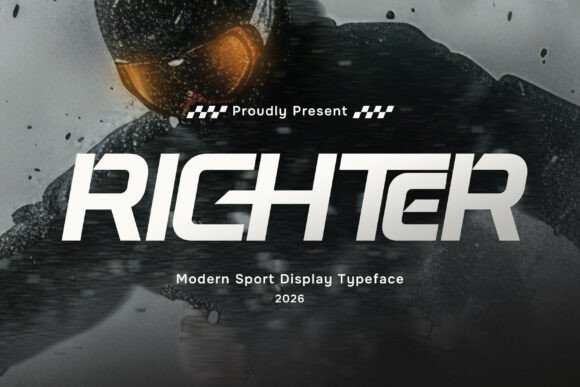
Richter is a modern sport display typeface with an aggressive, forward-leaning character structure. The letterforms feature sharp, aerodynamic terminals that echo the sleek contours of professional racing machinery and high-performance athletic gear. There's a deliberate tension in the design—each character feels like it's pressing forward, ready to break through whatever comes next. This creates an instant sense of motion, even in static designs.
Where Richter Truly Shines
Not every font fits every project, and Richter is no exception. This is a display typeface at its core, which means it's built for impact rather than extended reading. Think of it as your go-to creative font when the job calls for commanding attention at a glance.
Automotive and motorsport branding is an obvious home for Richter. Racing teams, performance parts manufacturers, and automotive event promoters can use this typeface to establish credibility and visual authority within their industry. The font's structural integrity holds up remarkably well against busy, high-action background imagery—something that's essential when you're overlaying text on photos of cars tearing around a track.
Extreme sports logos and event graphics benefit enormously from Richter's personality. Whether you're designing for a BMX competition, an MMA event, or an adventure racing series, the typeface communicates the intensity and physicality that audiences in these spaces expect. It pairs exceptionally well with metallic textures, carbon-fiber patterns, and neon-lit color palettes—visual languages that are already native to these communities.
Competitive gaming overlays and esports branding represent another natural fit. The futuristic, techno-sport aesthetic of Richter aligns perfectly with the visual culture of competitive gaming. Tournament organizers, streamers, and gaming peripheral brands can leverage this typeface to create broadcast graphics, stream overlays, and merchandise that feel authentic to the space.
Beyond these obvious applications, consider Richter for fitness supplement packaging, athletic apparel branding, sports betting platforms, energy drink marketing, and any commercial project where you need to communicate power and momentum. It's a versatile display font when applied within its strengths.
Practical Considerations for Working with Richter
Choosing the right typeface for a project goes beyond personal preference—it requires evaluating fit, testing combinations, and understanding the technical details that affect your final output.
Evaluating project fit starts with asking whether your project demands visual intensity. Richter works best when applied to massive headlines on event posters, jersey numbering, digital broadcast graphics, or hero sections of websites. If your project primarily involves body copy, detailed product descriptions, or long-form editorial design, you'll want to pair Richter with a more readable companion—a clean sans serif font or even a straightforward serif font for supporting text.
Testing font pairings is essential. Because Richter has such a strong personality, it benefits from contrast in secondary typefaces. A geometric sans serif font with even proportions can provide visual breathing room. Avoid pairing it with other highly stylized display fonts, script fonts, or handwritten fonts, as this typically creates visual competition rather than hierarchy. The goal is to let Richter anchor your headlines while a quieter typeface handles the supporting work.
Readability considerations matter more than you might think with a display typeface. At large sizes, Richter remains crystal clear—its sharp terminals and defined character shapes ensure legibility even against complex backgrounds. However, at smaller sizes, the aggressive styling can compromise readability. Test your designs at the actual viewing distance and size your audience will experience. For digital applications like web design or social media graphics, preview on multiple screen sizes to confirm the text holds up.
Reviewing included styles and features reveals the full capability of this premium font. Richter supports PUA encoding, which gives you seamless access to its complete library of stylistic features. This means you can access alternate characters, ligatures, and special glyphs without relying on advanced design software workarounds. Before starting a project, explore the full character set—you might discover stylistic options that elevate your design in ways you hadn't initially considered.
Licensing and commercial use is a practical detail that many designers and small business owners overlook until it becomes a problem. If you're using Richter for commercial projects—whether that's packaging design, brand identity work, merchandise, or client deliverables—make sure your license covers the intended use. Most premium font licenses distinguish between personal and commercial applications, and some require additional licensing for embedding in digital products or applications.
Building a Brand Identity Around Richter
For entrepreneurs and brand strategists, a typeface selection is a strategic decision that influences brand perception, recognition, and audience engagement over time. When Richter becomes part of your brand identity system, it signals specific qualities to your audience: speed, modernity, competition, and performance.
Consistency is critical here. If Richter appears on your logo, it should also appear on your event posters, social media graphics, merchandise, and digital broadcast materials. This repetition builds recognition. Over time, your audience begins associating that distinctive forward-leaning, aggressive letterform with your brand—before they even read the words.
The key is applying Richter where it creates the most impact and using restraint everywhere else. Let it own your headlines, your logo lockups, your hero banners, and your jersey numbers. Then step back and let a complementary typeface carry the informational load. This approach creates a clear visual hierarchy that guides your audience's attention exactly where you want it.
Whether you're launching a new fitness brand, designing the visual identity for a racing team, creating competitive gaming overlays, or developing marketing materials for an extreme sports event, Richter provides the cutting-edge authority that modern, high-energy projects demand. It's a design asset that earns its place in your toolkit—not by being the loudest voice in the room, but by being the most purposeful one.